At P. van Osch in Leunen, crate processing had long been under pressure. The existing process required multiple operators and consisted of separate, partly manual steps. This caused inefficiency, variation in handling and limited scalability.
With increasing volumes and higher demands for hygiene and lead time, it became clear that a new approach was needed.
Step by step to automation
The automation at P. van Osch was not realized all at once, but deliberately built up step by step.
The first step was the investment in a crate erector (unfolding machine). This solution immediately brought more structure and efficiency to the process. Due to the positive results and reliability of the installation, the confidence to automate further grew.
In the next phase, P. van Osch invested in expanding the line with a crate closing system (folding line) and additional automation.
This phased approach shows how collaboration and proven performance lead to further optimization and investment.
One automated line, minimum commitment
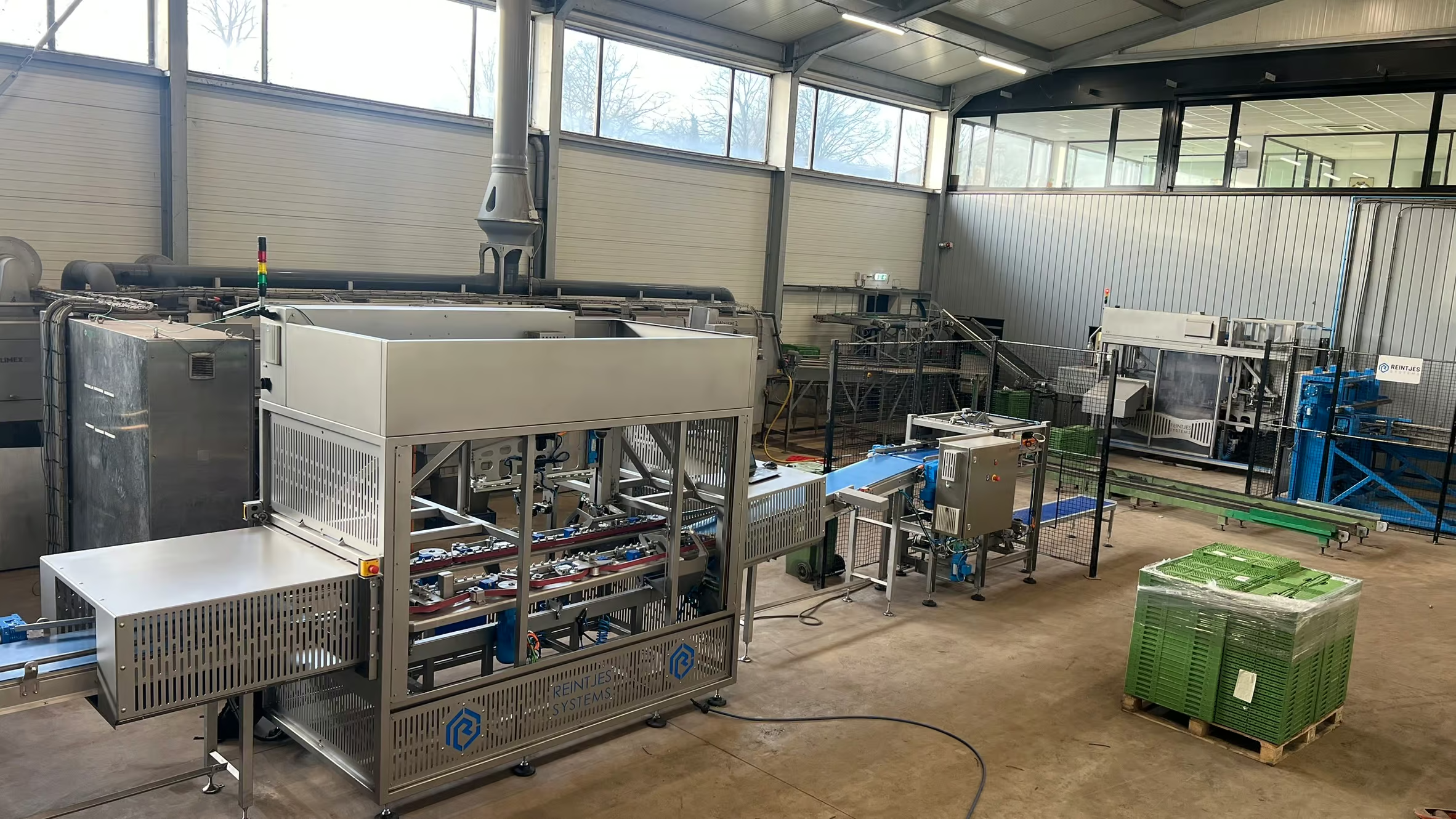
Together with Reintjes Systems, a fully automated solution was eventually realized for processing collapsible crates. Where previously several employees were needed, the entire process is now controlled by just one operator.
The line includes:
- Depalletizing dirty crates
- Automatic unfolding (crate erector)
- Transport and buffering
- Intensive washing
- Automatic folding (crate closing)
- Stacking of folded crates
All steps are integrated into one continuous flow, virtually eliminating manual intervention.
More control, less dependence
Through automation, P. van Osch has not only drastically reduced the number of operators required, but also increased the reliability of the process.
The line runs stably and predictably, with consistent processing quality. In addition, dependence on personnel is greatly reduced – an important advantage in a tight labor market.
Flexible and future-proof
The plant is designed with flexibility in mind. Different crate types can be processed without conversion, ensuring maximum usability within the production environment.
The scalable design also makes the line ready for further growth.
Working together for results
During the project, there was intensive collaboration to ensure that the solution perfectly matched the practice. Short lines of communication and a pragmatic approach enabled rapid switching and optimization.
This resulted in a solution that is not only technically strong, but also perfectly aligned with daily operations.
The result
With the new automated line, P. van Osch has made a major efficiency improvement:
- From 4 operators to 1
- Phased investment with proven returns
- Less manual handling
- Higher and stable capacity
- Constant quality
- More control over the process
A future-proof solution ready for further growth.